GreenLyne
The project
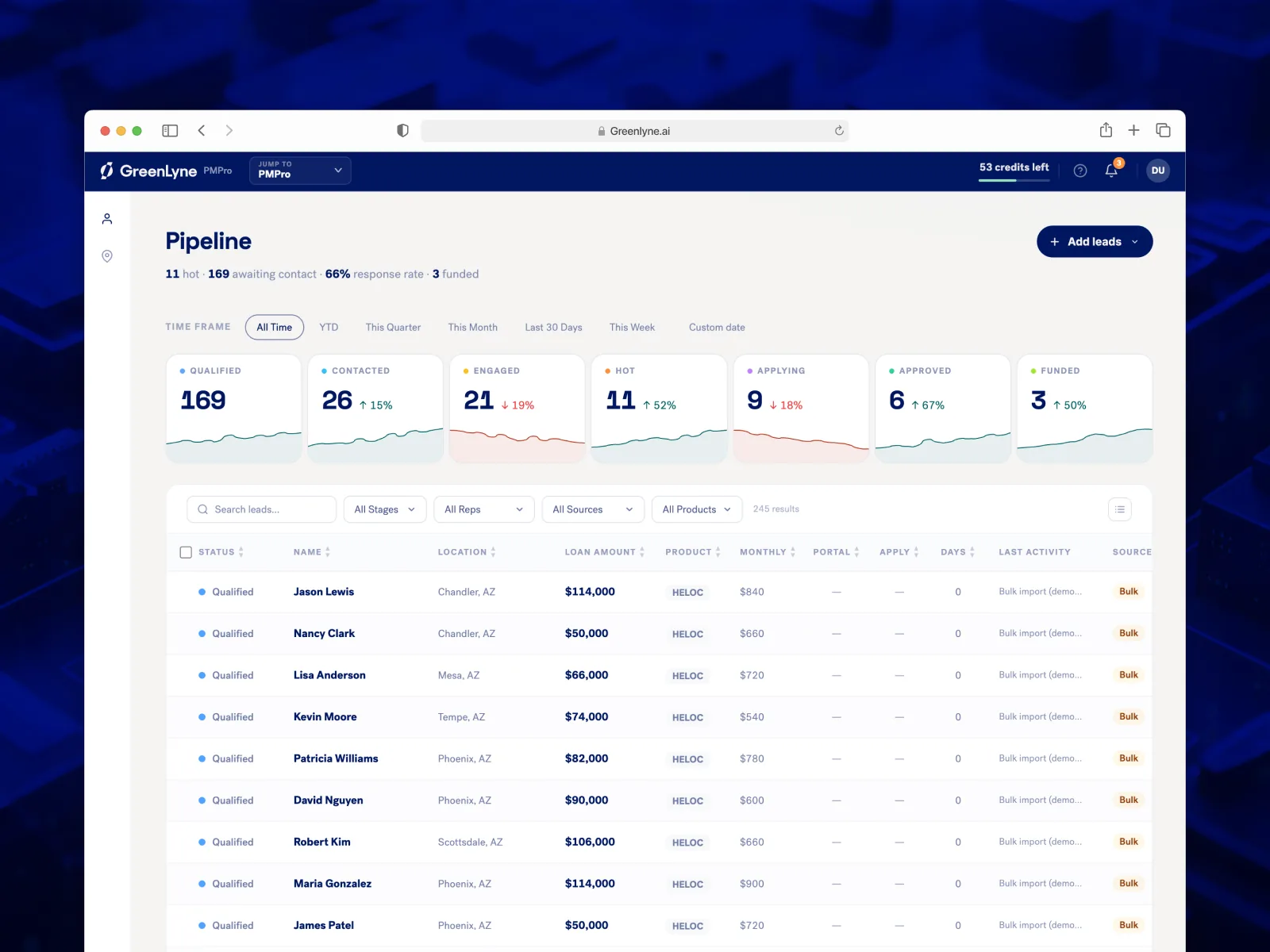
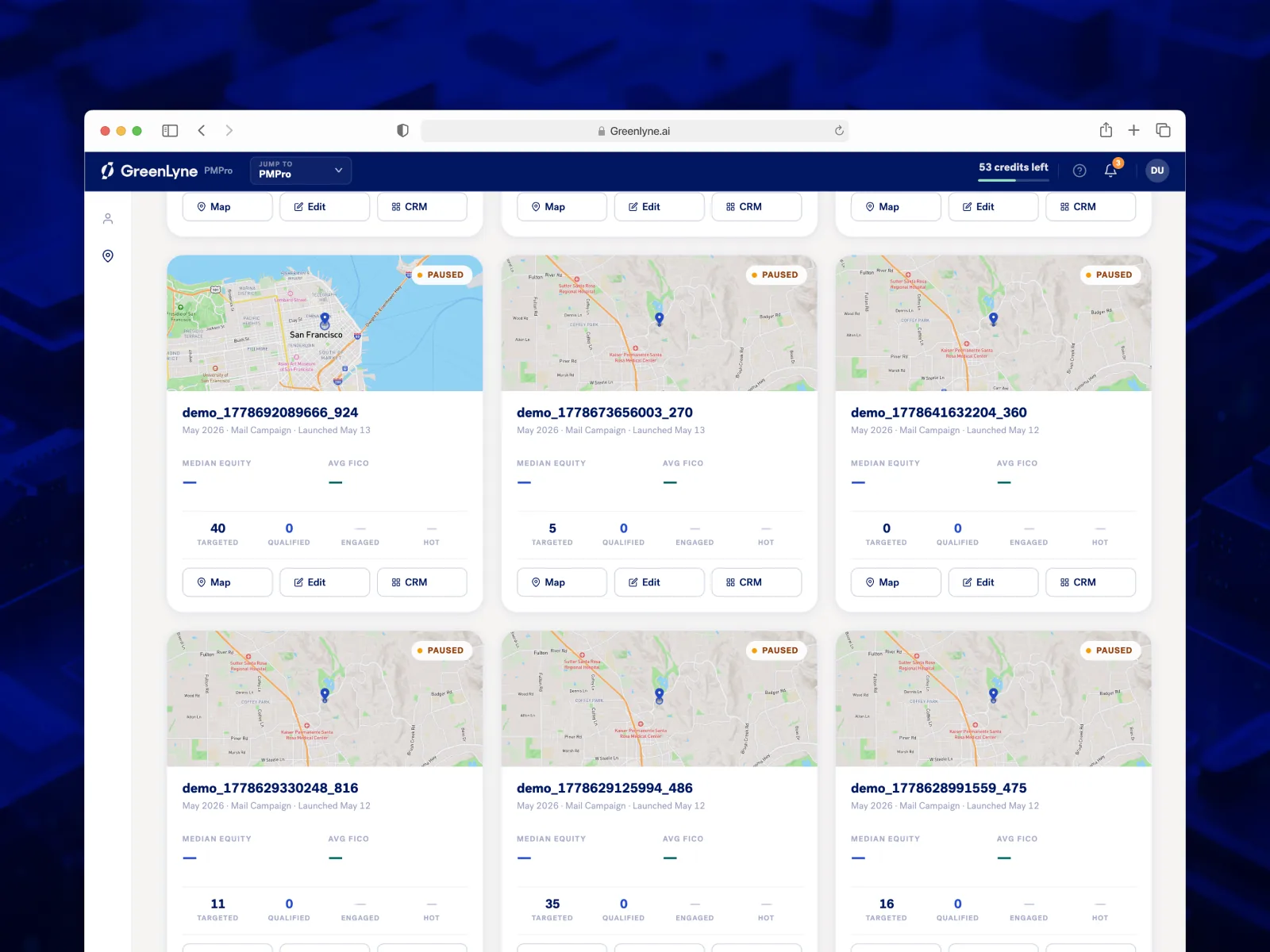
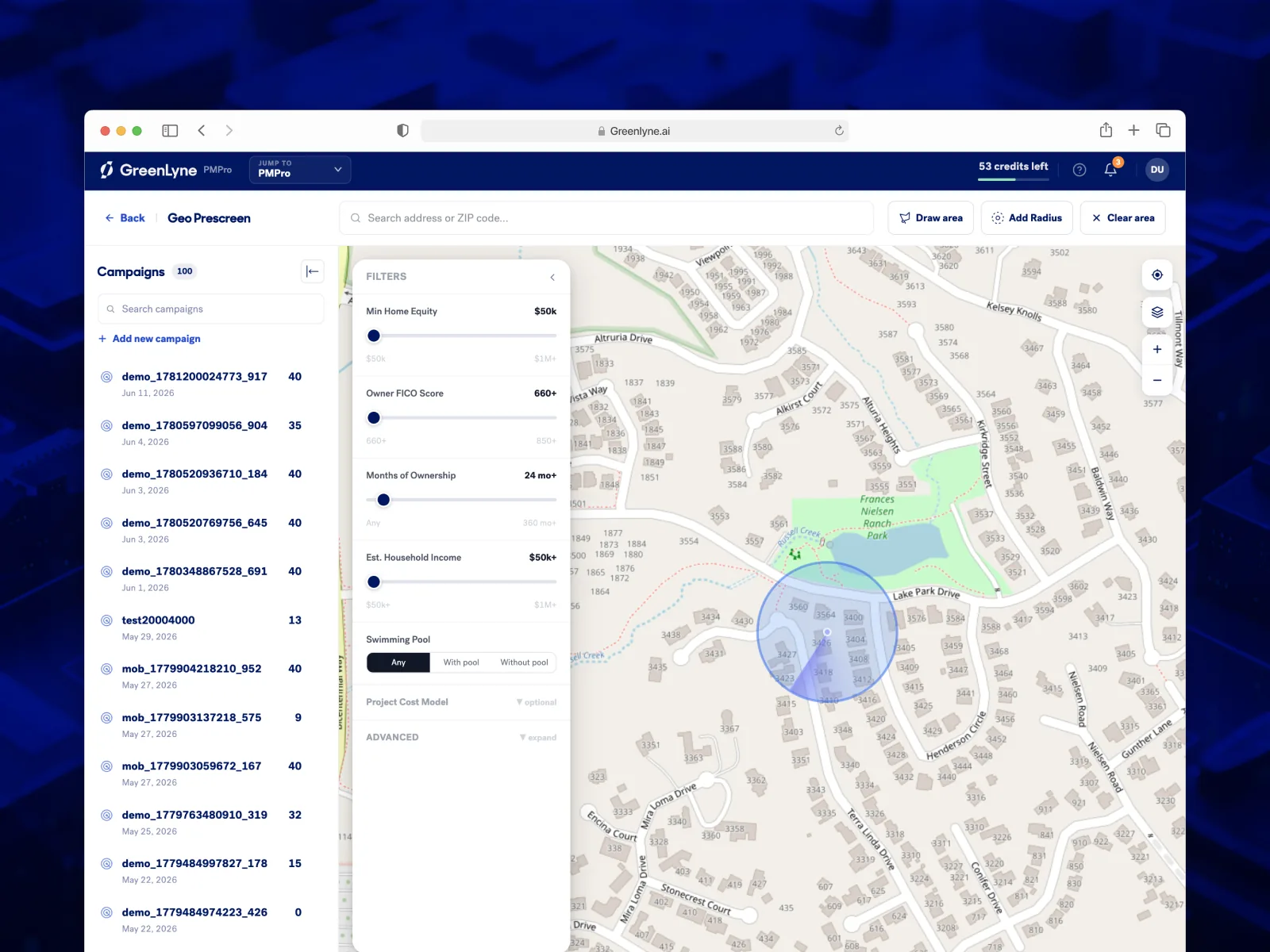
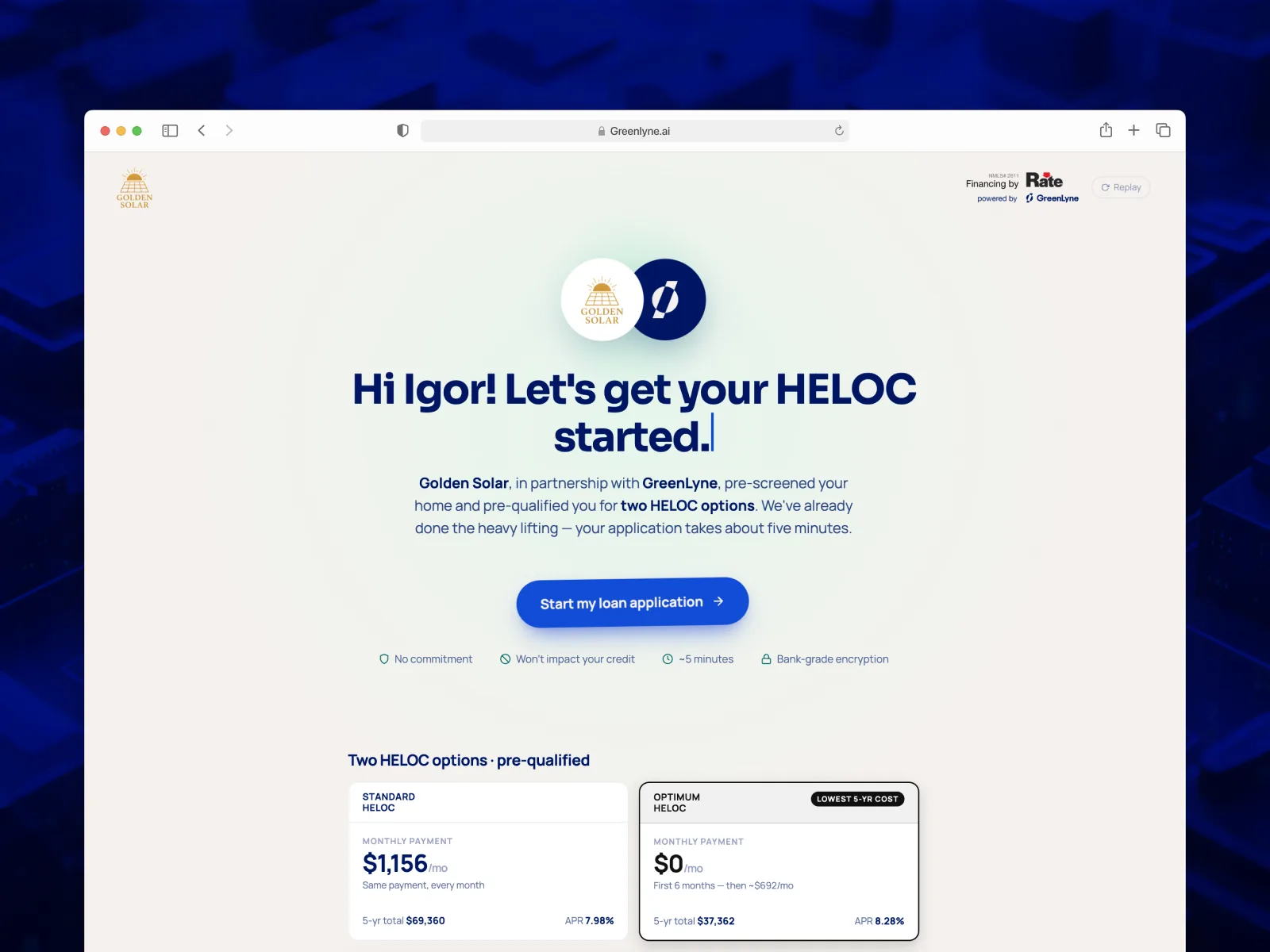
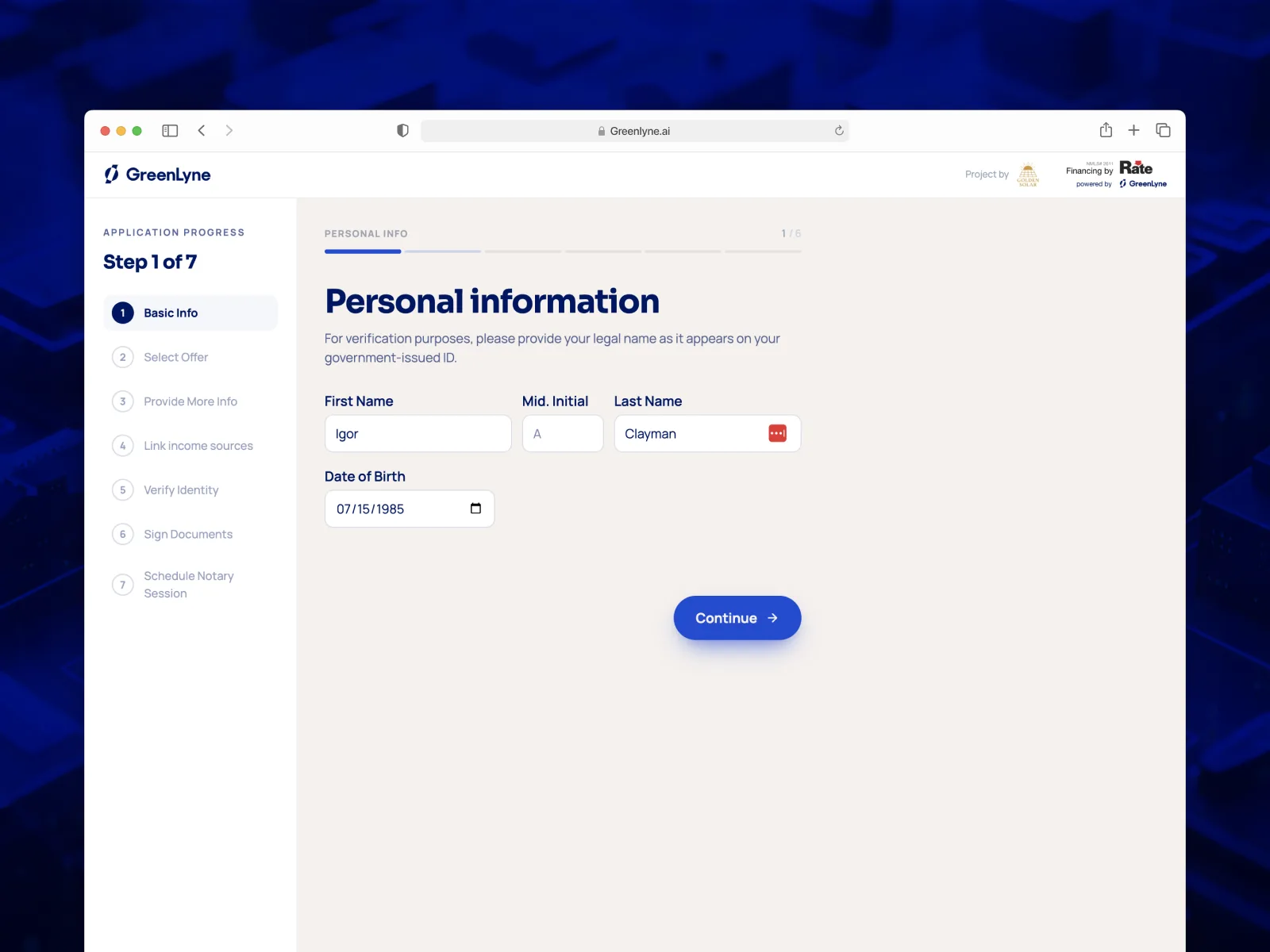
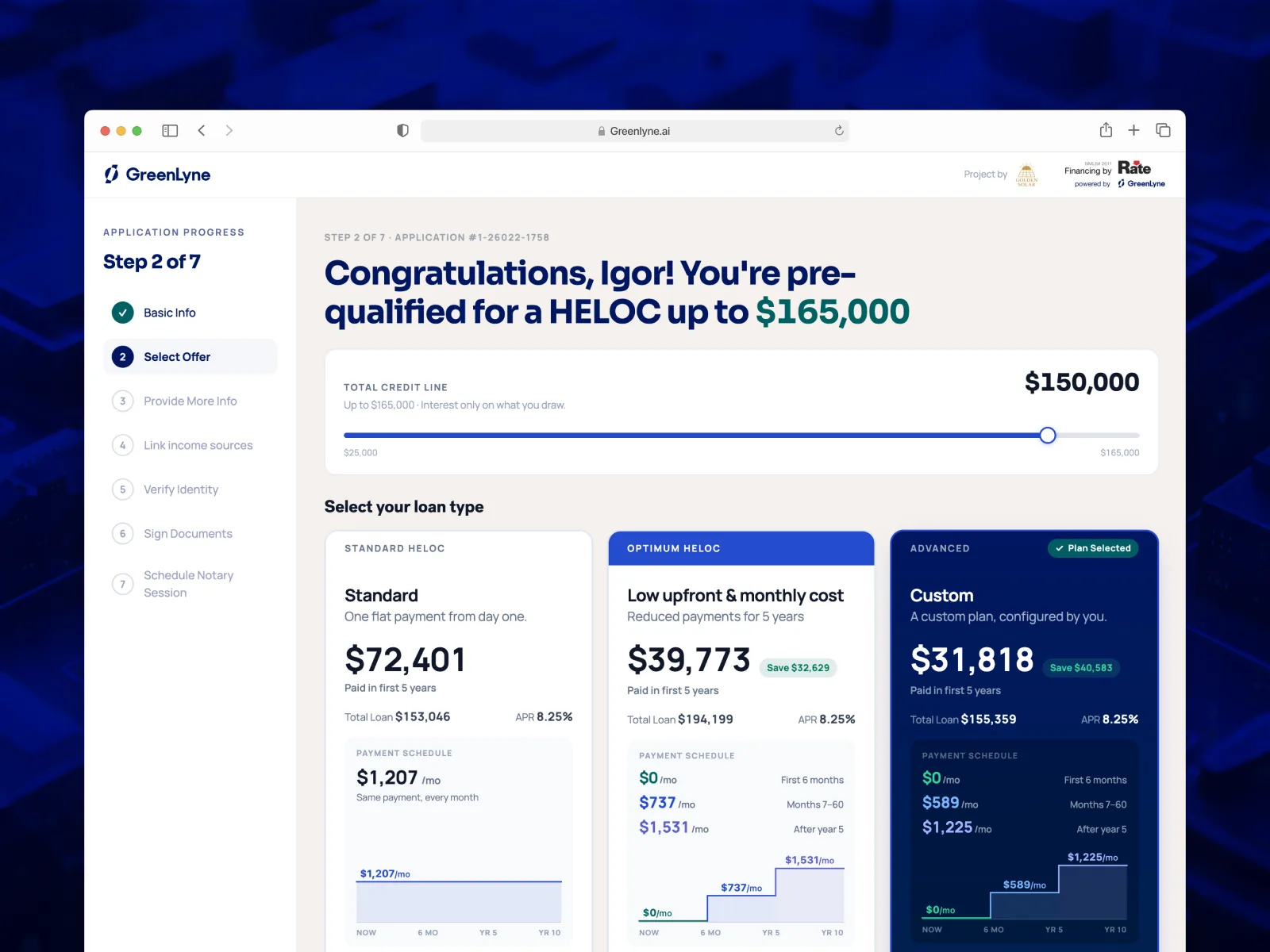
GreenLyne is a B2B platform for home improvement financing that brings three groups together: merchants, lenders, and homeowners. Merchants are home service companies, such as solar installers, who use it as their CRM to manage leads, import lists in bulk, run campaigns targeted by geography, and track sales through pipelines and data-heavy dashboards. Lenders provide the HELOC financing behind those projects, and homeowners are the people who apply for it.
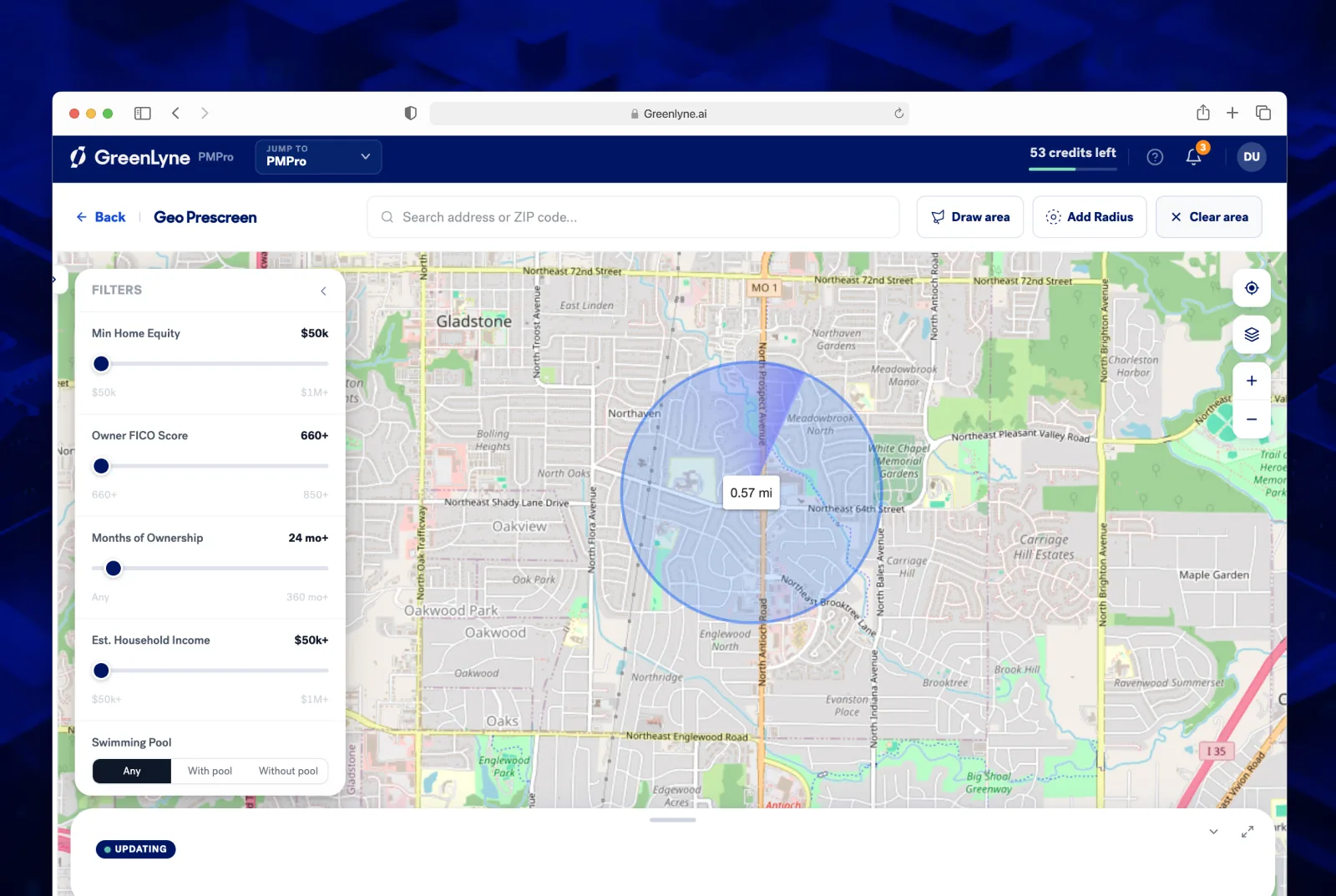
The vision for GreenLyne is to show who qualifies for a HELOC loan. The product runs on desktop and mobile, and merchants in the field can use it to screen homes for potential qualified leads.
My role
Senior Product Designer for UX and UI, owning product design end to end and driving AI-assisted prototyping alongside it.
The problem
The workflows at the heart of the product were complex and dense. Managing a pipeline, importing thousands of leads at once, setting up a geo-targeted campaign, and reading a dashboard full of metrics each carried a lot of states and edge cases, and the existing experience made them harder than they should have been. There was also a gap between design and engineering: static screens could not show how these flows were meant to behave, so too much was left to interpretation during the build.
What I did
Redesigned the complex workflows one by one: lead pipelines, bulk imports, geo-targeted campaigns, and the data-heavy dashboards. For each, worked from user flows and wireframes through high-fidelity UI, keeping the experience responsive across desktop and mobile, and folded the recurring patterns into reusable design system components.
Used Claude to build interactive prototypes of the redesigned product, so concepts could be tried as working software rather than pictures. That made it possible to validate ideas quickly, walk stakeholders through real behavior, and give engineers a precise reference for states, transitions, and edge cases before implementation began.
The outcome
A clearer, faster product whose hardest workflows now hold up under real use, with a component library that keeps new screens consistent as the product grows. The prototype-first approach shortened the loop between idea and validation and reduced the back-and-forth between design and engineering during the build.
Skills and deliverables
- Product design
- UX and UI
- Figma
- Claude
- AI prototyping